
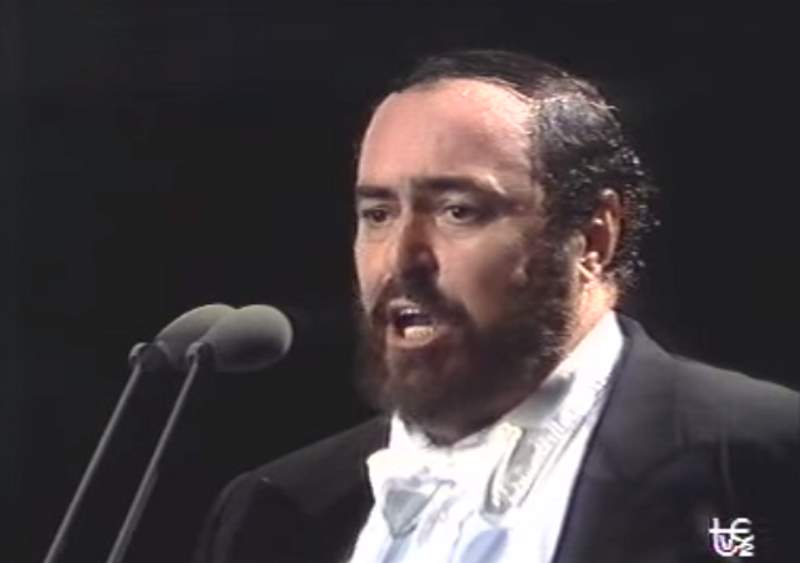
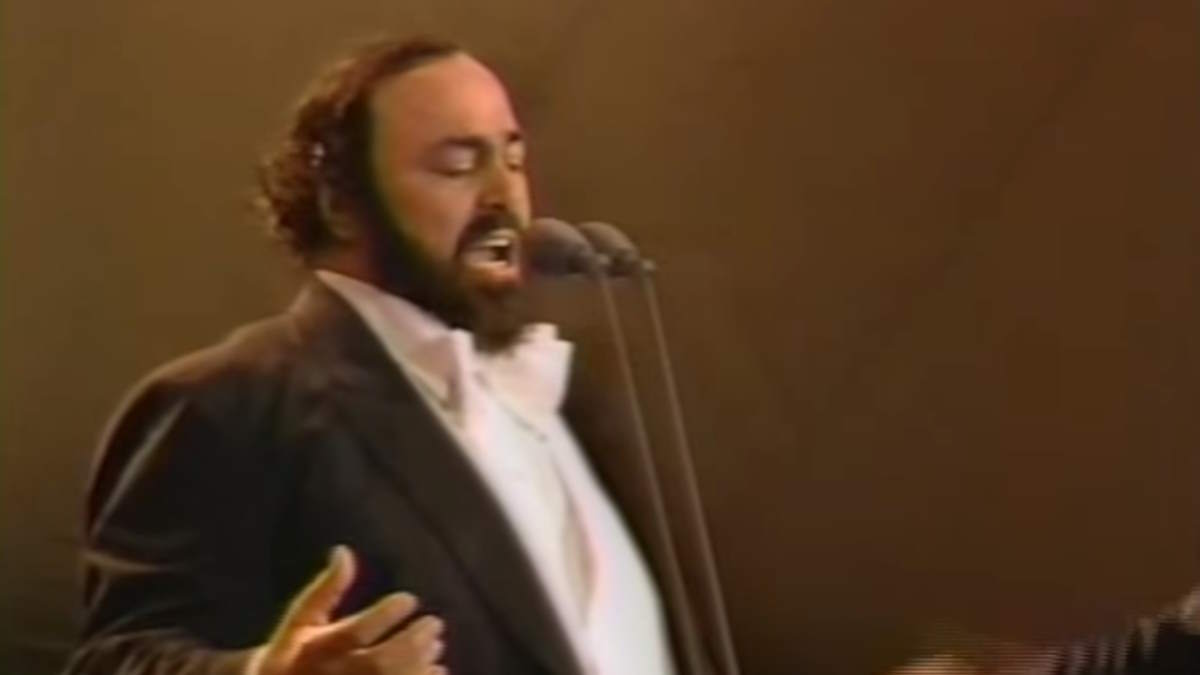
The legendary Italian tenor Luciano Pavarotti gave a concert at New York’s Central Park on June 26, 1993, accompanied by the New York Philharmonic Orchestra conducted by Leone Magiera. More than 500,000 listeners gathered for Pavarotti’s free performance on that evening.
Pavarotti’s Central Park Concert Program
With start times in the video above:
- 0:00:00 Overture
- 0:06:47 Giuseppe Verdi: Quando le sere al placido (from Luisa Miller)
- 0:12:55 Saverio Mercadante: Flute Concerto in E minor, 3rd Movement “Rondò russo (Allegro vivace scherzando)”. Soloist: Andrea Griminalli.
- 0:19:58 Gaetano Donizetti: Fra poco a me ricovero (Edgardo’s aria) from Lucia di Lammermoor
- 0:27:00 Giuseppe Verdi: I vespri siciliani overture. I vespri siciliani is a five-act opera by Giuseppe Verdi, first written in French for the Paris Opéra under the title Les vêpres siciliennes. It premiered in June 1855 and was translated into Italian soon afterward. The libretto was written by Eugène Scribe and Charles Duveyrier, based on their earlier work Le duc d’Albe. The opera’s story is loosely inspired by the Sicilian Vespers, a historical uprising that took place in Sicily in 1282.
- 0:36:04 Francesco Cilea: Lamento di Federico from L’arlesiana
- 0:40:44 Billy Strayhorn: Take the “A” Train [Guest singers: The Boys Choir of Harlem director: Walter J. Turnbul]
- 0:44:16 Duke Ellington: It Don’t Mean a Thing (If It Ain’t Got That Swing) [Guest singers: The Boys Choir of Harlem, director: Walter J. Turnbul]
- 0:47:26 Calvin Bridges: I Can Go to God in Prayer [Guest singers: The Boys Choir of Harlem, director: Walter J. Turnbul]
- 0:51:25 Ruggero Leoncavallo: Mattinata
- 0:53:40 Pietro Mascagni: Serenata
- 0:57:00 Cesare Andrea Bixio: La mia canzone al vento
- 1:00:40 Georges Bizet/François Borne: Fantaisie brillante sur ‘Carmen’. Soloist: Andrea Griminalli.
- 1:07:40 Eldo Di Lazzaro: Chitarra Romana
- 1:11:02 Gabriele Sibella: La Girometta
- 1:13:15 Luigi Denza: Occhi di fata [Flute: Andrea Griminalli]
Lyrics
Giuseppe Verdi: Quando le sere al placido, Rodolfo’s aria from Luisa Miller
Luisa Miller is an opera in three acts by Giuseppe Verdi (1813-1901) to an Italian libretto by Salvadore Cammarano (1801-1852), based on the play Kabale und Liebe (Intrigue and Love) by the German dramatist Friedrich von Schiller (10 November 1759 – 9 May 1805).
Quando le sere al placido lyrics [text]
Italian
Quando le sere al placido
chiator d’un ciel stellato
meco figgea nell’eterelo
sguardo innamorato,
e questa mano stringer
midalla sua man senita…
Ah! mi tradita!
Allor, ch’io muto, estatico
da’ labbri suoi pendea,
ed ella in suon angelico,
“amo te sol” dicea,
tal che sembrò l’empiereo
apirisi all’alma mia!
Ah! mi tradia!
English translation
When the nights are placid
cheater of a starry sky
meco figgea in the ether
the look in love,
And this holds me
from his senile man…
Ah! betray me!
Then, I am silent, ecstatic
from his lips his pendea,
and she in angelic sound,
“I love you,” he said,
so that he seemed the impiereo
open yours to mine!
Ah! it betrays me!
Fra poco a me ricovero
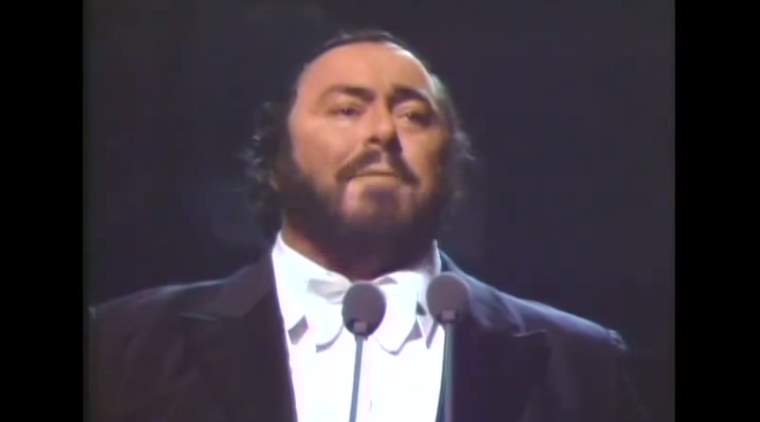
“Fra poco a me ricovero” is Edgardo’s aria from Gaetano Donizetti’s Lucia di Lammermoor, sung by the tenor near the end of the opera. It comes in Act III, at the tombs of the Ravenswood family, shortly before Edgardo kills himself.
At this point, Edgardo believes Lucia has betrayed him by marrying Arturo. In reality, she was manipulated and forced into the marriage. Edgardo does not yet know the full truth.
He is waiting near the Ravenswood tombs for a dawn duel with Enrico, Lucia’s brother. He is not afraid of death; he actually welcomes it. The Opera Guide synopsis describes the scene this way: Edgardo waits at the tombs, thinks bitterly of Lucia’s apparent faithlessness, later learns of her death, realizes he has misjudged her, and stabs himself, hoping to join her in death.
The phrase “Fra poco a me ricovero” means roughly “Soon, a refuge for me…”
The opera was written by Gaetano Donizetti, with a libretto by Salvadore Cammarano, and was first performed at the Teatro di San Carlo in Naples on 26 September 1835. Ricordi describes it as one of Donizetti’s most continuously performed and popular operas.
Fra poco a me ricovero lyrics [text]
Italian
Tombe degli avi miei, l’ultimo avanzo
D’una stirpe infelice
Deh’! raccogliete voi. – Cessò dell’ira
Il breve foco … sul nemico acciaro
Abbandonar mi vo’.
Per me la vita
È orrendo peso! … l’universo intero
E’ un deserto per me senza Lucia! …
Di liete faci ancora
Splende il castello! Ah! scarsa
Fu la notte al tripudio! Ingrata donna!
Mentr’io mi struggo in disperato pianto
Tu ridi, esulti accanto
Al felice consorte!
Tu delle gioje in seno, io … della morte!
Frà poco a me ricovero
Darà negletto avello …
Una pietosa lagrima
Non scorrerà sù quello!
Fin degli estinti, ahi misero!
Manca il conforto a me!
Tù pur, tù pur dimentica
Quel marmo dispregiato.
Mai non passarvi, o barbara,
Del tuo consorte a lato …
Rispetta almen le ceneri
Di chi morià per tè.
English translation
Tombs of my ancestors,
Take in the last remnant
of a doomed family.
The brief fire of anger is gone.
I shall give myself up
to my enemy’s sword.
Life is now a dreadful weight to me.
The entire world is empty,
a desert without Lucia.
The castle still glitters
with joyful lights.
Ah, the night was too short
for their merrymaking!
Ungrateful woman!
While I am consumed
by hopeless tears,
You laugh and rejoice
beside your fortunate husband.
You live in joy.
I go to death.
Soon, a forgotten grave
will be my refuge.
Not one merciful tear
will fall upon it.
Even the comfort of the dead
is denied to me.
And you, you too, forget
that scorned tombstone.
Never pass by it, cruel one,
beside your husband.
Only respect the ashes
of the man who died for you.
È la solita storia del pastore [Lamento di Federico]
“È la solita storia del pastore”, also known as “Lamento di Federico”, is a famous tenor aria from Act II of Francesco Cilea’s opera L’arlesiana (1897).
The aria is sung by Federico, a young man hopelessly in love with a woman from Arles, the unseen “Arlesiana” of the title. His family, however, wants him to marry Vivetta, a kind young woman who has loved him since childhood. Federico cannot return her feelings because his heart belongs entirely to L’Arlesiana.
Left alone, Federico reads the letters of l’Arlesiana, which reveal that she has another lover. Devastated by the discovery, he reflects on his heartbreak and sings this deeply sorrowful lament. The aria expresses his loneliness, disillusionment, and emotional collapse as he realizes that the woman he loves does not truly belong to him.
Lamento di Federico lyrics [text]
Italian
È la solita storia del pastore…
Il povero ragazzo voleva raccontarla
E s’addormì.
C’è nel sonno l’oblio.
Come l’invidio!
Anch’io vorrei dormir così,
nel sonno almen l’oblio trovar!
La pace sol cercando io vo’.
Vorrei poter tutto scordar!
Ma ogni sforzo è vano.
Davanti ho sempre di lei
il dolce sembiante.
La pace tolta è solo a me.
Perché degg’io tanto penar?
Lei! Sempre lei mi parla al cor!
Fatale vision, mi lascia!
Mi fai tanto male! Ahimè!
English translation
It’s the old tale of the shepherd…
The poor boy wanted to retell it
And he fell asleep.
There is oblivion in sleep.
How I envy him!
I, too, would like to sleep like that
To find oblivion at least in slumber!
I am searching only for peace.
I would like to be able to forget everything!
Yet every effort is in vain.
Before me, I always have
her sweet face.
Peace is ever taken from me.
Why must I suffer so very much?
She, as always, speaks to my heart.
Fatal vision, leave me!
You hurt me so deeply! Alas!
Take the “A” Train
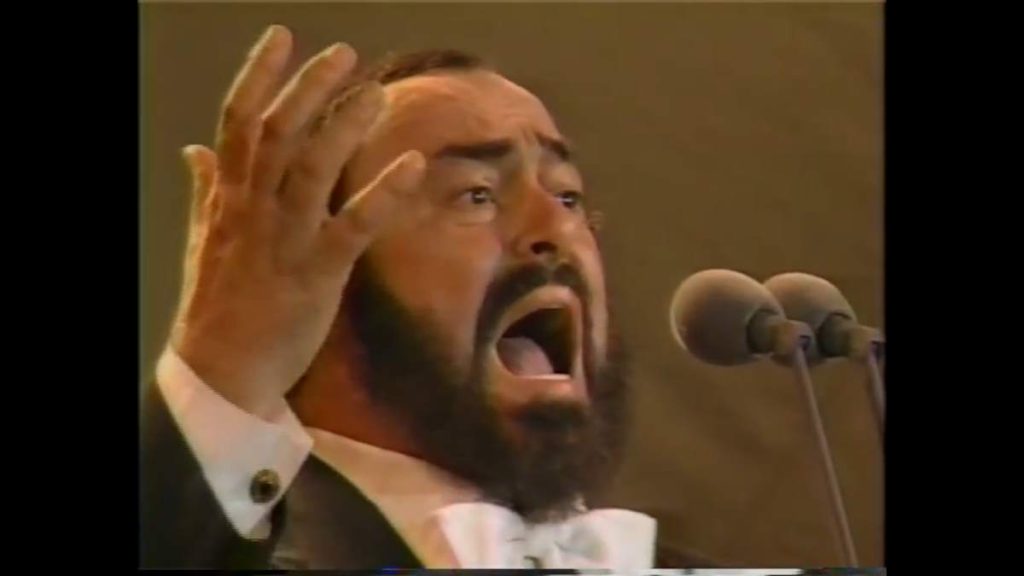
“Take the ‘A’ Train” is a famous jazz standard composed by Billy Strayhorn and best known as the signature tune of the Duke Ellington Orchestra. Written in 1939, it took its title from Ellington’s directions to Strayhorn when he invited him to New York, telling him to take the city’s new A subway line to Harlem.
The piece became especially important in 1940, when a dispute over ASCAP broadcast fees prevented Ellington from freely performing many of his own works on the radio. Ellington asked Strayhorn and his son Mercer, who were affiliated with BMI, to create new music for the band. “A Train” replaced “Sepia Panorama” as the orchestra’s theme.
The song was first recorded for radio in January 1941 and commercially in February 1941. Its bright swing style, elegant structure, and Harlem associations made it one of Ellington’s defining works. Lyrics were later popularized by Joya Sherrill, while Ray Nance became closely associated with its vocal and trumpet parts.
The tune appeared in films, broadcasts, recordings, and later pop culture. It entered the Grammy Hall of Fame in 1976 and was included in NPR’s list of major 20th-century American musical works, and remains an important jazz landmark today.
Take the “A” Train Lyrics
You must take the “A” train
to go to Sugar Hill way up in Harlem.
If you miss the “A” train
you’ll find you ve missed the quickest way to Harlem.
Hurry, get on, now it’s coming.
Listen to those rails a thrumming.
All board! Get on the “A” train.
Soon you will be on Sugar Hill in Harlem.
Duke Ellington: It Don’t Mean a Thing [If It Ain’t Got That Swing]
“It Don’t Mean a Thing, If It Ain’t Got That Swing” is a 1931 jazz composition by Duke Ellington, with lyrics by Irving Mills. First published by Mills, the song went on to become one of the best-known jazz standards of the twentieth century. Jazz historian Gunther Schuller later described it as “now legendary” and called both the piece and its title prophetic. In 2008, Ellington’s 1932 recording was inducted into the Grammy Hall of Fame.
Ellington composed and arranged the music in August 1931 while performing at the Lincoln Tavern in Chicago. According to Ellington, the song’s famous title came from a saying used by trumpeter Bubber Miley, one of the important early members of Ellington’s orchestra. Miley was seriously ill with tuberculosis at the time and died in 1932, the same year the song was released.
The song was first recorded by Duke Ellington and His Orchestra for Brunswick Records on February 2, 1932. Ivie Anderson provided the vocal, while trombonist Joe “Tricky Sam” Nanton and alto saxophonist Johnny Hodges played the instrumental solos. In later performances, trumpeter Ray Nance often sang the vocal part.
Ellington later wrote that the song became famous because it expressed a feeling widely shared among jazz musicians of the period. Its title also helped popularize the word “swing” in American popular music, before the Swing Era fully emerged later in the 1930s.
It Don’t Mean a Thing [If It Ain’t Got That Swing] lyrics
It don’t mean a thing, if it ain’t got that swing
(doo-ah, doo-ah, doo-ah, doo-ah, doo-ah, doo-ah, doo-ah, doo-ah)
It don’t mean a thing, all you got to do is sing
(doo-ah, doo-ah, doo-ah, doo-ah, doo-ah, doo-ah, doo-ah, doo-ah)
It makes no difference
If it’s sweet or hot
Just give that rhythm
Everything you’ve got
It don’t mean a thing, if it ain’t got that swing
(doo-ah, doo-ah, doo-ah, doo-ah, doo-ah, doo-ah, doo-ah, doo-ah)
It don’t mean a thing, all you got to do is sing
(doo-ah, doo-ah, doo-ah, doo-ah, doo-ah, doo-ah, doo-ah, doo-ah)
It makes no difference
If it’s sweet or hot
Just give that rhythm
Everything you’ve got
It don’t mean a thing, if it ain’t got that swing
(doo-ah, doo-ah, doo-ah, doo-ah, doo-ah, doo-ah, doo-ah, doo-ah)
It makes no difference
If it’s sweet or hot
Just give that rhythm
Everything you’ve got
It don’t mean a thing if it ain’t got that swing
It don’t mean a thing, all you got to do is sing
(doo-ah)
It makes no difference
If it’s sweet or hot
Just give that rhythm
Everything you’ve got
Don’t mean a thing, all you’ve gotta do is swing
It don’t mean a thing, all you’ve gotta do is sing
It makes no difference
If it’s sweet or hot
Give that rhythm
Everything you’ve got
It don’t mean a thing if it ain’t got that swing
(doo-ah, dooooo-aaaaah)
Don’t mean a thing
Calvin Bridges: I Can Go to God in Prayer
I Can Go to God in Prayer” is one of those gospel songs whose power comes from directness. Written by Calvin Bridges in 1976 and made famous by Albertina Walker’s 1981 live recording, it turns private distress into public worship. Its call-and-response structure makes the song feel like a conversation between a suffering believer and a reassuring church congregation.
Verse 1
Makes no difference what the problem,
(I can go to God in prayer).
Yes, I have this blessed assurance,
(I can go to God in prayer).
He will take my gloom and sorrow,
(turn it into light).
He will comfort, strengthen, and keep me,
(I can go to God in prayer)
Chorus
I can call Him when I need Him,
Our Father, up in heaven;
I can go to God in prayer,
I can go to God in prayer.
Verse 2
Sometimes my burdens they get so heavy,
(I can go to God in prayer).
I have found one who is so faithful,
(I can go to God in prayer).
He will take my gloom and sadness,
(turn it into light).
He will never, ever forsake me, Lord
(I can go to God in prayer).
Chorus
Sometimes my burdens they get so heavy, Lord, Oh Lord
(I can go to God in prayer).
Yes, I have this blessed assurance,
(I can go to God in prayer).
He will take my gloom and sorrow,
(turn it into light).
He will never, never forsake me
(I can go to God in prayer).
Chorus
Bridge
He can work it out, He can work it out;
(yes, He can),
(yes, He can),
(yes, He can),
(oh yes, He can).
I know without a doubt, I know without a doubt;
(yes, He can),
(yes, He can),
(yes, He can),
(oh yes, He can).
He will brighten up your way, each and every day
(yes, He can),
(yes, He can),
(yes, He can),
(oh yes, He can).
Ruggero Leoncavallo: Mattinata
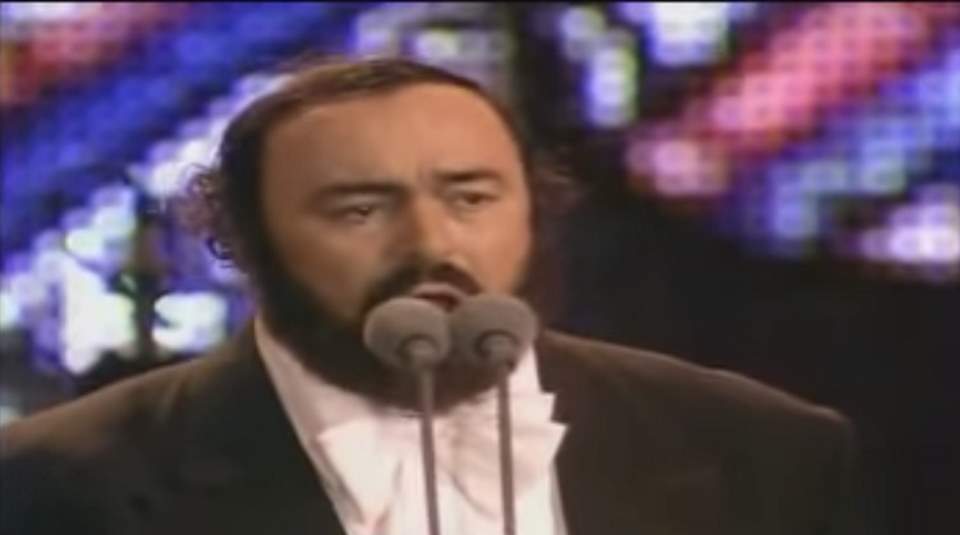
“Mattinata” is a song composed by Ruggiero Leoncavallo in 1904. It’s unique in Leoncavallo’s oeuvre because, while he is primarily remembered as a composer of operas, especially for “Pagliacci,” “Mattinata” is a standalone song, and it was the first composition ever written expressly for the Gramophone Company (which is now HMV).
The song’s title, “Mattinata,” translates to “Morning” in English. It’s a bright, spirited song about the beauty of a morning filled with sunlight and love, and it has become a popular piece in the tenor repertory.
The first two lines of the song give a hint of its mood:
“Wake up, my love, it is already morning,
The roses, my darling, have all bloomed.”
The uplifting melody and beautiful lyrical content have made “Mattinata” a favorite for both performers and audiences. Over the years, many famous tenors, including Luciano Pavarotti, have recorded their renditions of the piece.
One point of interest is that Leoncavallo himself wrote the lyrics, which is in line with his typical approach; similarly, he wrote both the music and the libretto for “Pagliacci.”
Mattinata Lyrics
Italian: Mattinata
L’aurora di bianco vestita
Già l’uscio dischiude al gran sol;
Di già con le rosee sue dita
Carezza de’ fiori lo stuol!
Commosso da un fremito arcano
Intorno il creato già par;
E tu non ti desti, ed invano
Mi sto qui dolente a cantar.
Metti anche tu la veste bianca
E schiudi l’uscio al tuo cantor!
Ove non sei la luce manca;
Ove tu sei nasce l’amor.
Ove non sei la luce manca;
Ove tu sei nasce l’amor.
English translation: Morning
The dawn, wearing a white dress,
It’s already allowing the sun to cross the threshold.
It’s already caressing with her pink fingers
the crowd of flowers!
The Creation all around seems to be moved by
an arcane shiver;
And you are not getting up, and
I’m singing painfully in vain.
Put your white gown on
and let your cantor cross the threshold!
Light lacks where you are missing,
Love is born where you are.
Light lacks where you are missing,
Love is born where you are.
Pietro Mascagni: Serenata
Serenata is a love song composed by Pietro Mascagni, an Italian composer best known for his operas, particularly “Cavalleria Rusticana.” “Serenata” is part of his collection of art songs and showcases his talent for creating beautiful, expressive melodies.
Serenata [Mascagni] Lyrics
Italian
Come col capo sotto l’ala bianca
dormon le palombelle innamorate,
Così tu adagi la persona stanca
sotto le coltri molli e ricamate.
La testa bionda sul guancial riposa
lieta de’ sogni suoi color di rosa
e tra le larve care al tuo sorriso
una ne passa che ti sfiora il viso.
Passa e ti dice che bruciar le vene,
che sanguinare il cor per te mi sento.
Passa e ti dice che ti voglio bene,
che sei la mia dolcezza e il mio tormento.
Bianca tra un nimbo di capelli biondi
lieta sorridi ai sogni tuoi giocondi.
Ah, non destarti, o fior del Paradiso,
ch’io vengo in sogno per baciarti in viso!
English translation
Like with my head under my white wing
Sleeping the divers in love,
So you lay down the tired person
under the soft and embroidered coats.
Blonde head on the pillow rests
Happy with her rose-colored dreams
And among the larvae dear to your smile
One passes by and brushes against your face.
He passes by and tells you that to burn your veins,
That my heart bleeds for you, I feel.
She comes by and tells you that I love you,
that you are my sweetness and my torment.
Bianca is surrounded by a nimbus of blonde hair
Joyfully smile at your joyful dreams.
Ah, do not awake, O flower of Paradise,
Cesare Andrea Bixio: La mia canzone al vento
“La mia canzone al vento” means “My song to the wind.” It is one of those old Italian popular songs that sits halfway between light music, film song, and tenor showpiece. It is not an opera aria, strictly speaking, but it has often been sung by operatic tenors because it needs a broad, ringing, lyrical voice.
The song was written in 1939 by the famous Italian songwriting pair Cesare Andrea Bixio, music, and Bixio Cherubini, lyrics. This is slightly confusing because both names contain “Bixio,” but they are two different people. The song is listed as Italian, with music by Cesare Andrea Bixio and lyrics by Bixio Cherubini.
It was connected with the 1939 Italian film of the same title, directed by Guido Brignone and starring the tenor Giuseppe Lugo as Carlo Tanzi. The film was a black and white musical comedy, and its English title was given as My Song to the Wind.
Musically, it is catalogued as a fox trot from the film of the same name, which tells you something important about its character. It is not pure opera; it belongs to the Italian popular song tradition of the 1930s, but dressed in a highly lyrical, almost operatic vocal style.
The song became strongly associated with the Italian tenor Giuseppe Lugo (1899-1980), whose voice helped make it popular. A later Italian article describes it as a major success of the Bixio, Cherubini duo, made famous by Lugo, and helped by the release of the film in the same year.
The mood is romantic but also wounded. The singer addresses the wind as if it could carry him away from betrayal, memory, and pain. The refrain, “Vento, vento, portami via con te”, “Wind, wind, take me away with you,” is the emotional center of the song. The wind is not just weather here; it becomes escape, forgetfulness, and emotional release.
That is why the song works so well for tenors. It gives the singer a chance to combine nostalgia, heartbreak, and vocal expansion. The melody feels direct and popular, but the delivery can be almost operatic, especially in the climactic lines. This is very typical of Italian canzone from that period, accessible enough for the public, but noble enough for a great voice.
Bixio: La mia canzone al vento lyrics
Italian: La mia canzone al vento
Sussurra il vento come quella sera,
vento d’aprile, di primavera,
che il volto le sfiorava in un sospiro
Mentre il suo labbro ripeteva: giuro.
Ma pur l’amore è un vento di follia
che fugge come sei fuggita tu.
Vento, vento, portami via con te,
raggiungeremo insieme il firmamento,
dove le stelle brilleranno a cento,
e senza alcun rimpianto
voglio scordarmi un tradimento.
Vento, vento, portami via con te.
Tu passi lieve come una chimera,
Vento d’aprile, di primavera.
Tu che lontano puoi sfiorarla ancora,
dille ch’io l’amo ed il cuor mio l’implora,
dille ch’io fremo dalla gelosia
Solo al pensiero che la baci tu.
Vento, vento, portami via con te,
tu che conosci tutte le mie pene,
dille che ancor le voglio tanto bene.
Sotto le stelle chiare
forse ritornerà l’amore.
Vento, vento, portami via con te.
Sotto le stelle chiare
forse ritornerà l’amore.
Vento, vento, portami via con te.
Sussurra il vento come quella sera,
Perché non torni, è primavera…
English translation: My song to the wind
The wind whispers like that evening,
April wind, spring wind,
that brushed her face in a sigh
while her lips repeated: I swear.
But even love is a wind of madness
that flees just as you fled.
Wind, wind, take me away with you,
We will reach the sky together,
Where the stars will shine by the hundreds,
and without any regret
I want to forget a betrayal.
Wind, wind, take me away with you.
You pass lightly like a chimera,
April wind, spring wind.
You who can still touch her from afar,
Tell her that I love her, and my heart implores her,
Tell her that I tremble with jealousy
just at the thought that you kiss her.
Wind, wind, take me away with you,
you who know all my pains,
tell her that I still love her so much.
Under the clear stars,
maybe love will return.
Wind, wind, take me away with you.
Under the clear stars,
Maybe love will return.
Wind, wind, take me away with you.
The wind whispers like that evening,
Why don’t you come back, it’s spring…
Eldo Di Lazzaro: Chitarra Romana
Chitarra Romana (which means “Roman Guitar”) is a 1934 Italian folk song composed by the Italian composer Eldo Di Lazzaro (21 February 1902 – 29 November 1968) with lyrics by the Italian lyricist Bruno Cherubini (1897-1947) and Eldo Di Lazzaro.
The song is often associated with the city of Rome. The song praises the enchanting sound of a guitar playing in the streets of Rome, evoking the unique romantic and nostalgic atmosphere of the Eternal City.
Chitarra Romana lyrics
“Chitarra Romana” (Roman Guitar) is a classic Italian song, often associated with the city of Rome. The song praises the enchanting sound of a guitar playing in the streets of Rome, evoking the unique romantic and nostalgic atmosphere of the Eternal City.
Italian: Chitarra Romana
Sotto un manto di stelle
Roma bella mi appare,
solitario il mio cuor disilluso d’amor
vuol nell’ombra cantar.
Una muta fontana
e un balcone lassù,
o chitarra romana
accompagnami tu.
Suona suona mia chitarra
lascia piangere il mio cuore,
senza casa e senza amore
mi rimani solo tu.
Se la voce è un po’ velata
accompagnami in sordina,
la mia bella fornarina
al balcone non c’è più.
Lungotevere dorme
mentre il fiume cammina,
io lo seguo perché mi trascina con sé
e travolge il mio cuor.
Vedo un ombra lontana
e una stella lassù,
o chitarra romana
accompagnami tu.
Solo…
Se la voce è un po’ velata
accompagnami in sordina,
la mia bella fornarina
al balcone non c’è più.