
French classical guitarists Thibaut Garcia and Antoine Morinière play Johann Sebastian Bach’s Goldberg Variations (German: Goldberg-Variationen), BWV 988, a work for keyboard first published in 1741 and named after Johann Gottlieb Goldberg (14 March 1727 – 13 April 1756), the German virtuoso harpsichordist, organist, and composer. Garcia and Morinière approach this demanding piece with remarkable technical skill and deep musical sensitivity. Written originally for the harpsichord, the work gains a fresh voice in their hands. Their superb arrangement brings out Bach’s complex interwoven lines and full harmonic depth, giving the music a renewed sense of life while preserving its original brilliance.
Program
With start times in the video:
- 00:00 Aria
- 03:52 Variatio 1. a 1 Clav.
- 05:26 Variatio 2. a 1. Clav.
- 06:48 Variatio 3. Canone all Unisuono à 1 Clav.
- 08:30 Variatio 4. à 1 Clav.
- 09:19 Variatio 5. a 1 ô vero 2 Clav.
- 10:31 Variatio 6. Canone alla Seconda a 1 Clav.
- 11:33 Variatio 7. à 1. ô vero 2 Clav. (al tempo di Giga)
- 13:04 Variatio 8. a 2 Clav.
- 14:40 Variatio 9. Canone alla Terza. a 1 Clav.
- 16:11 Variatio 10. Fugetta. a 1 Clav.
- 17:31 Variatio 11. a 2 Clav.
- 19:20 Variatio 12. Canone alla Quarta.
- 21:00 Variatio 13. a 2 Clav.
- 24:55 Variatio 14. a 2 Clav.
- 26:33 Variatio 15. andante. Canone alla Quinta. a 1 Clav.
- 30:23 Variatio 16. a 1 Clav. Ouverture
- 32:02 Variatio 17. a 2 Clav.
- 33:52 Variatio 18. Canone alla Sexta. a 1 Clav.
- 35:14 Variatio 19. à 1 Clav.
- 36:27 Variatio 20. a 2 Clav.
- 38:01 Variatio 21. Canone alla Settima.
- 40:40 Variatio 22. a 1 Clav. alla breve
- 41:56 Variatio 23. a 2 Clav.
- 43:41 Variatio 24. Canone all Ottava a 1 Clav.
- 45:55 Variatio 25. a 2 Clav.
- 50:24 Variatio 26. a 2 Clav.
- 52:12 Variatio 27. Canone alla Nona. a 2 Clav.
- 53:50 Variatio 28. a 2 Clav.
- 55:37 Variatio 29. a 1 o vero 2 Clav.
- 57:21 Variatio 30. a 1 Clav. Quodlibet.
- 58:57 Aria da Capo è Fine
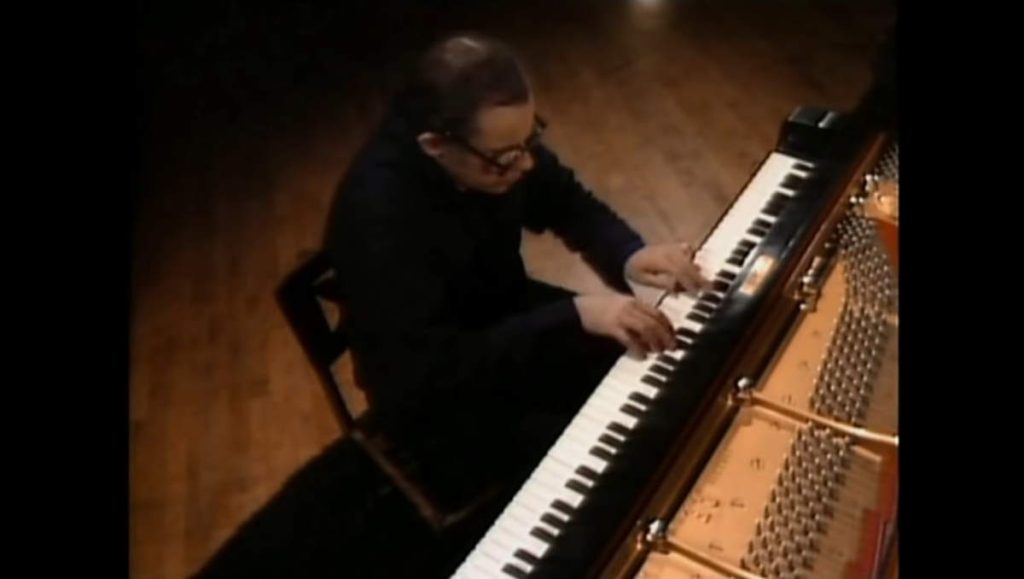
Johann Sebastian Bach’s Goldberg Variations
Johann Sebastian Bach’s Goldberg Variations, BWV 988, is one of the most celebrated keyboard works in Western music. It consists of an opening aria followed by thirty variations, and it was first published in 1741. The work is named after Johann Gottlieb Goldberg, who may have been its first performer.
The text explains that the best-known account of the work’s origin comes from Johann Nikolaus Forkel’s early biography of Bach. According to Forkel, Count Kaiserling, a former Russian ambassador at the Saxon court, suffered from insomnia and wanted Bach to compose keyboard pieces that Goldberg could play for him during sleepless nights. Forkel says Bach responded by writing these variations, and that the Count loved them so much that he rewarded Bach with a golden goblet filled with one hundred Louis d’or.
This story is charming and has often been repeated, but the text makes clear that modern scholars are cautious about accepting it as true. Forkel wrote his account more than sixty years after the supposed events, and several details raise doubts. For example, the published score contains no dedication to the Count, and Goldberg was only fourteen years old at the time of publication, though he was known to be a highly gifted keyboard player. Some scholars, such as Peter Williams, have even argued that Forkel’s story is entirely false.
The passage also mentions another scholarly debate, namely, whether Bach wrote the aria itself. Arnold Schering raised doubts about its authorship, but more recent scholarship, including work associated with Christoph Wolff, finds no solid basis for questioning Bach’s authorship of the aria.
On the publication side, the Goldberg Variations are unusual because Bach published them during his own lifetime. They were issued in 1741 by his friend Balthasar Schmid of Nuremberg, who used engraved copper plates rather than movable type, meaning the notes of the first edition were written in Schmid’s own hand. The title page presents the work as a Clavier Übung, or keyboard exercise, intended for the refreshment of the spirit of music lovers. Although Bach had used the label Clavier Übung for earlier keyboard collections, he did not explicitly number this work as the fourth part of the series.
Finally, the text notes the importance of surviving sources. Only nineteen copies of the first edition are known today. The most valuable is Bach’s own annotated copy, discovered in Strasbourg in 1974 and now kept in Paris. Since Bach’s original manuscript has not survived, these printed copies are essential for understanding his intentions.
Sources
- Goldberg Variations on Wikipedia
